Drew Schmid · 7 September 2026
Secure Data Encapsulation Methods Reshaping Solo Publisher Archiving Habits
Secure data encapsulation refers to techniques that wrap digital content inside protected containers using encryption algorithms, access controls, and metadata layers, and these approaches have gained traction among independent publishers who manage their own archives without institutional support. Researchers have documented steady adoption rates since the early 2020s as storage costs dropped and regulatory requirements around data retention tightened across multiple jurisdictions, while solo operators discovered that simple file copies no longer met compliance thresholds for long-term preservation.
Core Components of Modern Encapsulation Practices
At the technical level, encapsulation typically combines symmetric encryption standards such as AES-256 with container formats that embed checksums, permission schemas, and versioning histories directly into the file structure. Observers note that publishers now embed these layers during the initial save process rather than applying them as an afterthought, and this shift reduces the risk of data corruption during migration cycles. Data from industry reports shows that archives created with encapsulated methods maintain integrity verification rates above 99 percent over five-year periods, whereas legacy uncompressed backups experience higher failure rates due to bit rot and format obsolescence.
Many solo publishers integrate open-source libraries that automate key rotation and multi-factor authentication tied to the encapsulation layer, and these tools allow a single operator to enforce granular access rules without maintaining separate database systems. According to guidance published by the National Institute of Standards and Technology, consistent use of approved encryption modes ensures interoperability when archives move between different operating environments or get transferred to cloud repositories.
Changes in Daily Archiving Workflows
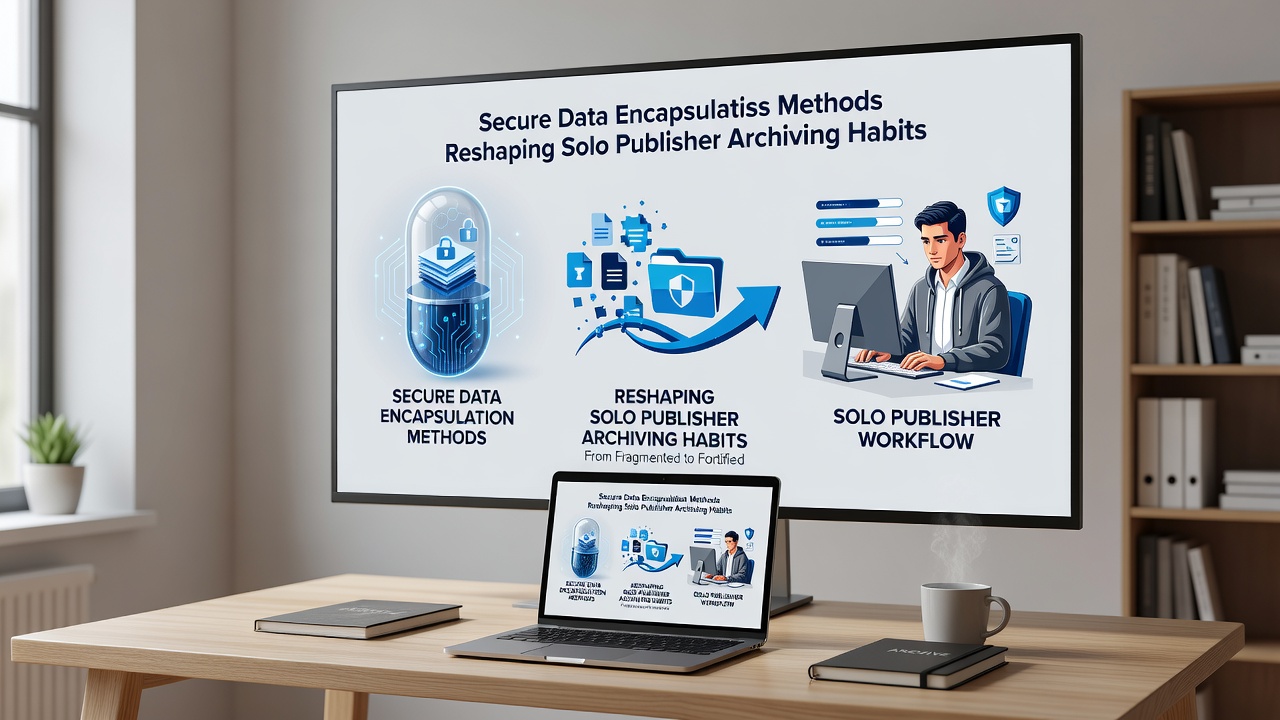
Traditional habits once centered on dragging folders into external drives or uploading raw files to generic cloud storage accounts, yet those patterns have given way to structured pipelines that generate encapsulated packages at the point of creation. Publishers who adopted the new methods report fewer instances of lost metadata because the container itself carries descriptive fields that survive format migrations, and automated scripts handle the wrapping process in the background while the user focuses on content production. This integration means archiving occurs continuously rather than during periodic cleanup sessions, which reduces the backlog that previously accumulated at the end of each quarter.
Case examples from independent news sites illustrate the transition: one operator in Australia implemented encapsulation software that tags each article bundle with publication dates, rights information, and checksums before storage, and this setup allowed quick retrieval during an audit requested by a funding body in 2025. Similar practices appear in academic self-publishing circles where researchers must retain raw datasets alongside final manuscripts for periods extending beyond a decade.
Regulatory and Technical Drivers
Updates to data protection frameworks in various regions have accelerated the move toward encapsulated archives because regulators increasingly require proof of encryption at rest along with audit trails. The Australian Cyber Security Centre has issued recommendations that emphasize container-based storage for organizations handling personal or sensitive information, and these guidelines influence even small-scale publishers who fall under sector-specific rules. In September 2026, forthcoming revisions to certain international digital preservation standards are expected to reference encapsulation techniques more explicitly, which may prompt further tooling updates among independent operators.
Technical communities have responded by releasing lightweight applications that run on consumer hardware yet still support enterprise-grade encryption schemes, and these solutions lower the barrier for users who lack dedicated IT staff. Studies conducted at several European research institutions indicate that the learning curve for basic encapsulation workflows has shortened considerably over the past three years, partly because interface design now mirrors familiar file manager patterns rather than command-line utilities.
Long-Term Preservation Outcomes
Evidence collected from multi-year archiving projects demonstrates that encapsulated files retain readability and authenticity even after repeated transfers across storage media, and this durability stems from the self-describing nature of the containers. Publishers who maintain collections spanning multiple decades find that embedded metadata prevents the common problem of orphaned files whose origins become unclear over time. The approach also supports selective decryption, allowing portions of an archive to remain accessible while other sections stay locked until specific conditions are met.
Conclusion
Secure data encapsulation methods continue to influence how solo publishers structure their archiving routines, and the combination of encryption standards, automated workflows, and regulatory alignment produces measurable improvements in data longevity and accessibility. As hardware and software tools evolve, independent operators gain practical options that scale with their individual needs while meeting external compliance expectations.